





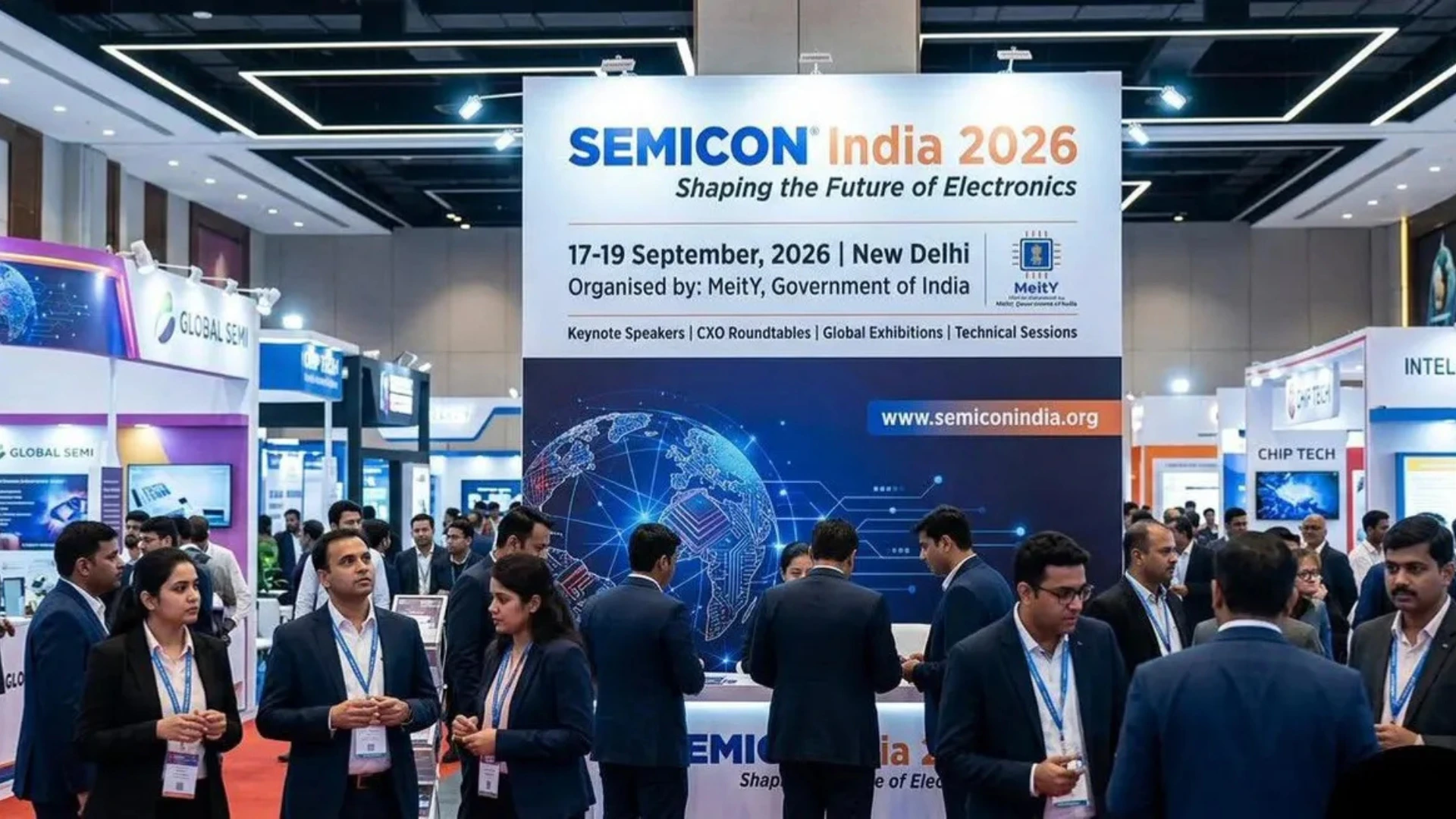
Semiconductor Industry Raises Operational Concerns at SEMICON India 2026
India’s rapidly developing semiconductor industry has highlighted several operational challenges related to customs procedures, transportation and regulatory approvals at SEMICON India 2026.
Industry participants raised these concerns during country roundtables held alongside the event, bringing together semiconductor companies, government representatives and other stakeholders to discuss India’s growing semiconductor ecosystem.
The government has acknowledged the concerns and indicated that it will work closely with industry participants to address the bottlenecks.
🏭 Customs and Transportation Challenges Highlighted
One of the major concerns raised by semiconductor companies relates to the movement of equipment, components and other specialised materials.
Semiconductor manufacturing involves complex global supply chains, with equipment and components often moving between multiple countries before reaching manufacturing or assembly facilities.
According to Electronics and Information Technology Minister Ashwini Vaishnaw, industry participants highlighted issues involving:
- Customs procedures
- Transportation and logistics
- Regulatory permissions
- Approval processes
The minister said the government would work with industry stakeholders to address these issues.
These improvements could become increasingly important as India expands its semiconductor manufacturing and electronics ecosystem.
🇮🇳 India’s Semiconductor Ecosystem Is Expanding
India is seeking to establish a broader semiconductor ecosystem covering multiple parts of the value chain.
This includes:
- Semiconductor manufacturing
- Chip packaging and testing
- Semiconductor equipment
- Electronics manufacturing
- Component supply chains
- Research and development
- Skilled semiconductor workforce
As more companies establish operations in India, efficient customs and logistics processes could play an important role in supporting manufacturing activity.
For semiconductor companies, delays in the movement of specialised equipment or components can affect production schedules and project timelines.
🤝 Government Promises to Work With Industry
The concerns were discussed during country roundtables conducted alongside SEMICON India 2026.
Speaking to reporters at the event, Ashwini Vaishnaw said the government had received positive feedback from the discussions while also acknowledging the operational issues raised by industry participants.
The government has indicated that it will work closely with companies to address problems related to customs, transportation and permissions.
This industry-government interaction is particularly relevant as India attempts to attract more semiconductor investments and establish itself as a manufacturing and technology hub.
🌏 Strong International Participation at SEMICON India 2026
SEMICON India 2026 has also attracted significant international participation.
According to the government, Japan and Singapore have each brought around 30 companies to their respective country pavilions.
Six country pavilions are participating in the event:
- 🇯🇵 Japan
- 🇰🇷 South Korea
- 🇲🇾 Malaysia
- 🇳🇱 Netherlands
- 🇸🇬 Singapore
- 🇸🇪 Sweden
The participation highlights the growing international interest in India’s semiconductor and electronics ecosystem.
🎓 Focus on Semiconductor Talent Development
Apart from manufacturing and investment, semiconductor talent development has emerged as another important focus area at the event.
The government has highlighted strong interest among students in semiconductor-related opportunities.
A 240-hour Level One semiconductor course has also been developed for high-school students.
Such initiatives are aimed at introducing students to semiconductor technologies at an early stage and creating a future talent pipeline for the industry.
💡 Why Customs and Regulatory Processes Matter
Semiconductor manufacturing is different from many conventional manufacturing industries because it relies on highly specialised equipment, materials and components.
Companies may need to import:
- Semiconductor manufacturing equipment
- Electronic components
- Specialised materials
- Testing equipment
- Production tools
- Precision machinery
Efficient customs clearance and transportation therefore become important factors in maintaining supply-chain reliability.
Similarly, faster regulatory approvals can help companies reduce delays when setting up or expanding manufacturing facilities.
🏢 SEMICON India 2026: Building the Semiconductor Ecosystem
SEMICON India 2026 is being held from September 17 to September 19, 2026, at Yashobhoomi, New Delhi.
The event is being conducted under the theme:
“Silicon to Systems: Building the Ecosystem”
The event brings together stakeholders from across the semiconductor and electronics value chain, including:
- Semiconductor companies
- Electronics manufacturers
- Government representatives
- Investors
- Startups
- Researchers
- Academic institutions
- Students
- Technology providers
The event also features a startup pavilion, student hackathon, country roundtables and workforce-development programmes.
🔮 What’s Next for India’s Semiconductor Industry?
India’s semiconductor ambitions are moving beyond attracting individual manufacturing projects toward building a broader ecosystem.
For this expansion to progress smoothly, companies will need reliable supply chains, efficient transportation infrastructure and predictable regulatory processes.
The concerns raised at SEMICON India 2026 indicate that industry participants are looking for improvements not only in investment incentives but also in the day-to-day processes required to operate manufacturing facilities.
The government’s response to these concerns could therefore be an important part of India’s efforts to strengthen its semiconductor manufacturing capabilities.
🏁 Conclusion
SEMICON India 2026 has highlighted both the opportunities and operational challenges facing India’s growing semiconductor industry.
While international participation and investment interest indicate increasing global engagement with India’s semiconductor ambitions, companies have also highlighted challenges involving customs, transportation and regulatory approvals.
The government has said it will work with industry stakeholders to address these bottlenecks.
As India continues to build capabilities across semiconductor manufacturing, packaging, electronics and related technologies, improving the overall ease of doing business could become an important part of developing a competitive semiconductor ecosystem.