




India’s ceramic tile industry has evolved from small traditional pottery clusters into one of the country’s most successful manufacturing sectors. Today, it is a high-technology, export-driven industry serving domestic and global markets. With a strong foundation in innovation, entrepreneurship, and policy support, India has become one of the world’s leading ceramic tile producers and exporters.
This transformation reflects India’s broader industrial growth, where traditional craftsmanship combines with modern technology and global market expansion.
Morbi: The Global Hub of India’s Ceramic Tile Production
At the center of India’s ceramic revolution is Morbi, Gujarat, which has become the country’s largest ceramic manufacturing cluster. The region produces nearly 90% of India’s ceramic tiles, supported by over 1,800 manufacturing units operating continuously.
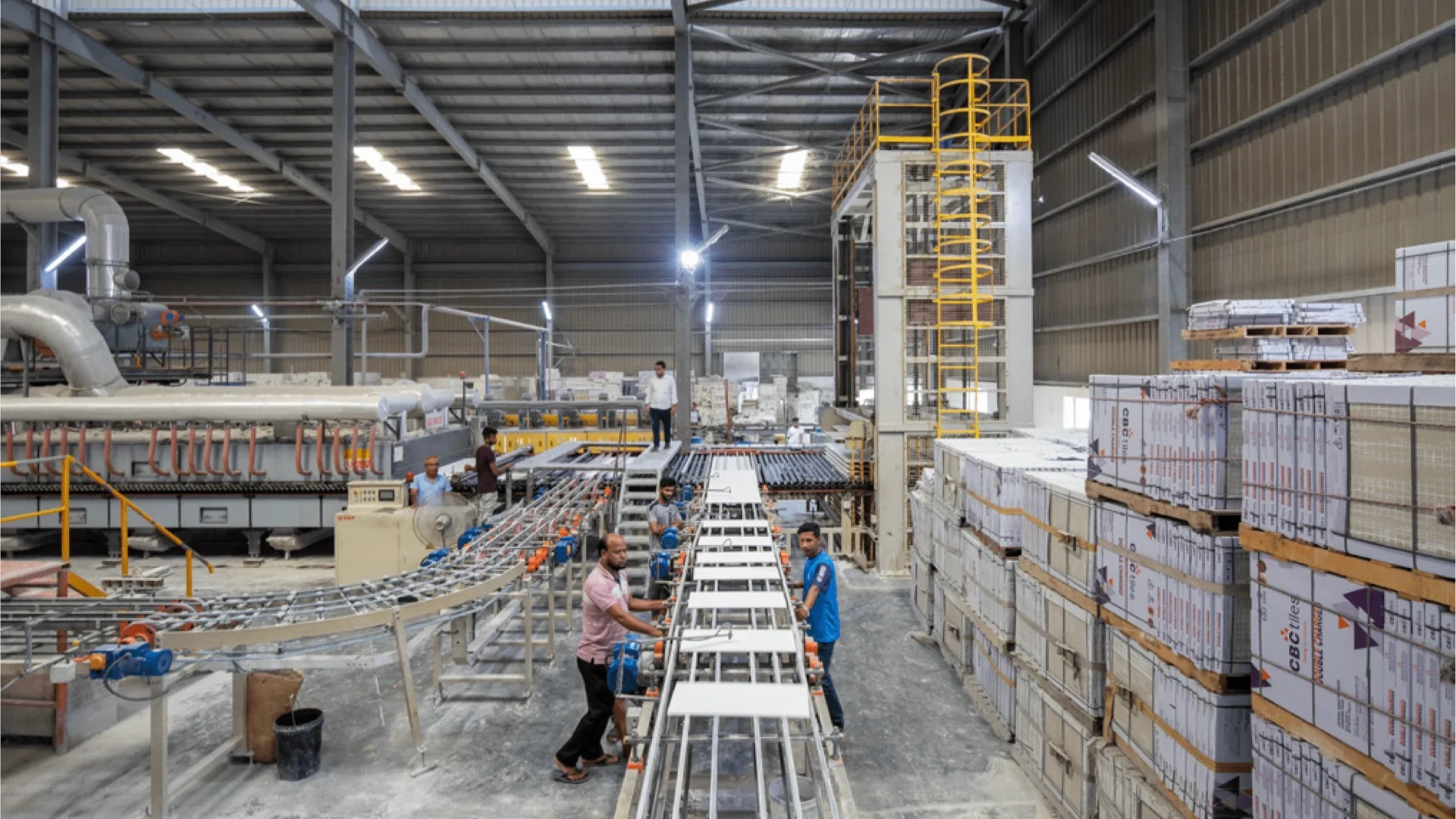
Morbi’s growth has been driven by advanced technologies such as digital printing, automation, and 3D visualization, which have improved both production efficiency and product quality. These innovations have helped Indian manufacturers compete globally.
Industry Size and Market Growth
India’s ceramic tile industry reached a market value of approximately ₹62,000 crore in FY24, making it one of the fastest-growing manufacturing sectors in the country.
Key highlights include:
- Domestic market value of around ₹42,000 crore
- Export value exceeding ₹20,000 crore
- Total domestic consumption of nearly 2,000 million square metres
- Export volume of approximately 590 million square metres
India is currently the second-largest producer, consumer, and exporter of ceramic tiles globally.
This growth is supported by increasing demand from housing, infrastructure, and commercial development projects.
Strong Export Performance and Global Presence
India has established itself as a major global supplier of ceramic tiles, exporting to markets across Asia, Africa, Europe, and the Americas.
Emerging markets such as Africa and Latin America are showing strong demand due to infrastructure development and urbanization. Indian manufacturers are competitive globally because of their ability to offer high-quality products at competitive prices.
Export growth continues to strengthen India’s position in the global construction materials market.
Digital Transformation Improving Customer Experience
Digital technology is transforming the way customers select and purchase ceramic tiles. Companies are introducing advanced tools such as 3D visualization platforms that allow customers to preview tile designs in real-world environments.
These digital solutions help customers:
- Visualize products before purchase
- Compare different designs easily
- Make better purchasing decisions
- Access products online
Technology is helping manufacturers expand their reach and improve customer engagement.
Sustainability and Environmental Responsibility
As the industry grows, environmental sustainability has become increasingly important. Ceramic manufacturing requires high energy consumption, and companies are investing in energy-efficient technologies to reduce environmental impact.
Key sustainability initiatives include:
- Adoption of cleaner energy sources
- Improved water and waste management systems
- Use of environmentally friendly production processes
Government policies and industry initiatives are encouraging sustainable manufacturing practices.
Future Growth Opportunities
India’s ceramic tile industry has significant growth potential, driven by several factors:
Rising Domestic Demand
Urbanization, infrastructure development, and increasing housing demand are driving growth in the domestic market.
India’s per capita tile consumption remains lower than many developed countries, indicating strong future growth potential.
Expansion in Premium Segment
Consumers are increasingly choosing premium and designer tiles, creating opportunities for manufacturers to expand into higher-value products.
Technology and Innovation
Digital manufacturing, automation, and product innovation will continue to improve efficiency and competitiveness.
Role in India’s Manufacturing and Startup Ecosystem
The ceramic tile sector is also creating opportunities for startups and entrepreneurs in areas such as:
- Manufacturing technology
- Design and product innovation
- Supply chain solutions
- Digital retail platforms
This industry contributes significantly to employment, exports, and economic growth.
Conclusion
India’s ceramic tile industry has transformed into a global manufacturing powerhouse, supported by innovation, technology, and strong domestic and international demand. With a market size of ₹62,000 crore and growing export presence, the industry continues to play a vital role in India’s economic development.
As manufacturers adopt advanced technologies and sustainable practices, India’s ceramic tile sector is well positioned for continued global leadership and long-term growth.