



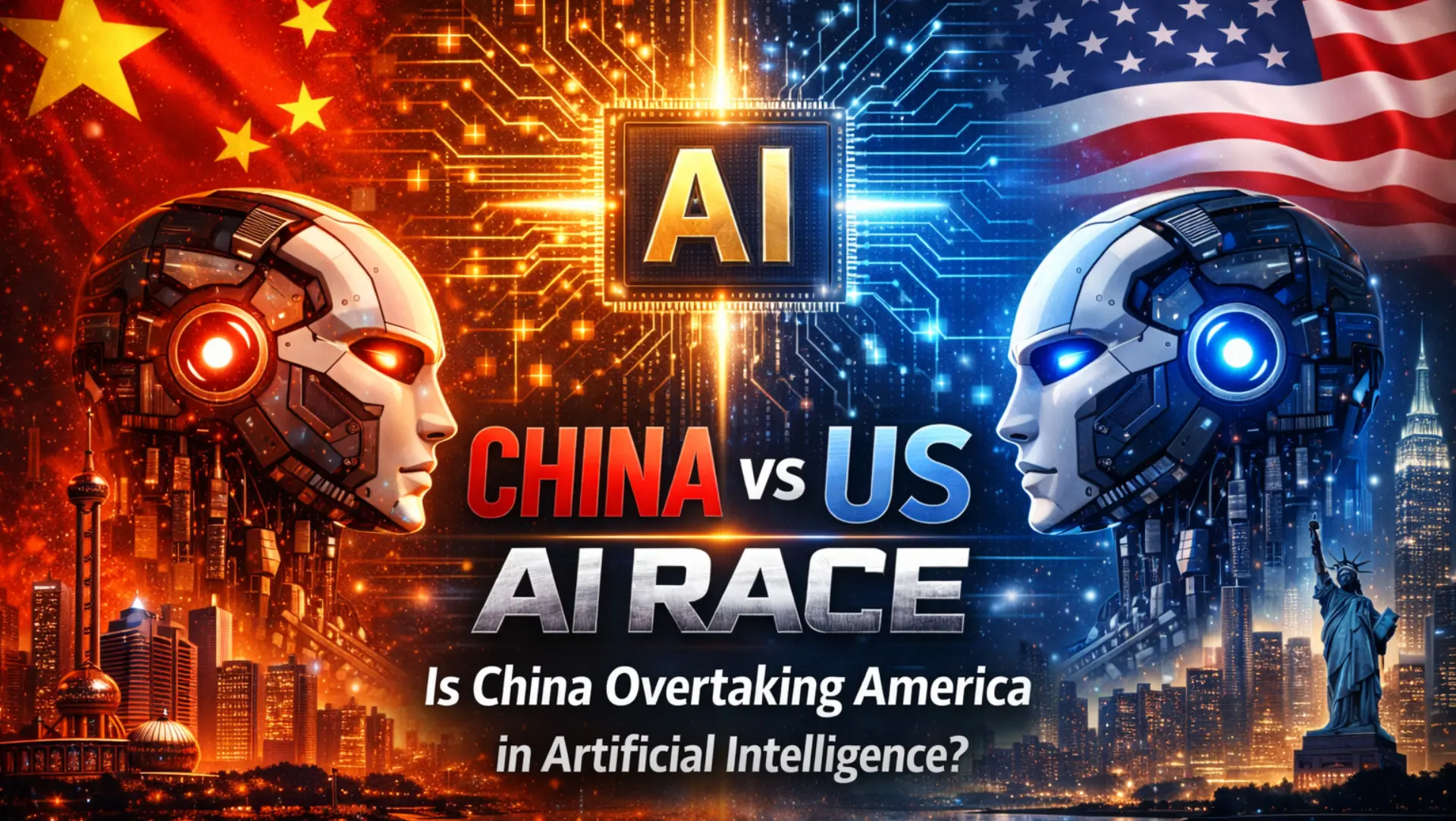
China’s artificial intelligence (AI) industry has grown at an extraordinary pace over the past decade, positioning itself as one of the strongest competitors to the United States in the global AI race. With massive government support, strong domestic tech giants, and access to large amounts of data, China appears unstoppable. However, despite its rapid progress, there are still critical challenges that could impact its long-term dominance.
This raises an important question: can China truly overtake the US in AI, or will structural and technological barriers slow its momentum?
China’s Rapid Rise in Artificial Intelligence
China has made AI a national priority. The Chinese government launched its Next Generation Artificial Intelligence Development Plan, aiming to make China the world leader in AI by 2030.
Major Chinese tech companies such as:
Baidu
Alibaba
Tencent
Huawei
ByteDance
have invested billions of dollars in AI research and development.
These companies are building advanced AI solutions across sectors including:
Autonomous vehicles
Facial recognition
Healthcare diagnostics
Smart cities
Robotics
Generative AI
China’s massive population also gives it access to enormous amounts of real-world data, which is essential for training advanced AI models.
Strong Government Support and Investment
One of China’s biggest strengths is strong government backing. The Chinese government provides:
Funding for AI startups
Infrastructure development
Research support
Policy incentives
China has also established multiple AI innovation hubs across cities such as Beijing, Shanghai, and Shenzhen.
Government support has helped China build a fast-growing AI ecosystem, enabling startups and tech giants to innovate rapidly.
Growing AI Startup Ecosystem
China has thousands of AI startups working on cutting-edge technologies, including:
Computer vision
Natural language processing
Robotics
AI chips
Autonomous systems
Chinese startups are competing globally and attracting significant investment.
Some Chinese AI companies are already leading in specific areas, especially facial recognition and surveillance technology.
Challenges China Still Faces
Despite its rapid growth, China’s AI industry faces several important challenges.
1. Dependence on Advanced Chips
One of the biggest limitations is China’s reliance on foreign semiconductor technology, especially advanced chips from companies like NVIDIA.
US export restrictions on advanced AI chips have made it more difficult for Chinese companies to access critical hardware needed for training large AI models.
2. Software and Innovation Gap
While China excels in implementation and scaling, the US still leads in core AI innovation, especially in foundational models and advanced research.
Companies such as OpenAI, Google DeepMind, and Anthropic remain global leaders in cutting-edge AI model development.
3. Global Trust and Adoption Challenges
Some Chinese AI companies face challenges expanding globally due to geopolitical concerns, data privacy issues, and regulatory restrictions in Western countries.
This can limit China’s ability to dominate international AI markets.
US Still Holds Key Advantages
The United States continues to lead in several critical areas, including:
Advanced semiconductor technology
AI research and innovation
Global AI companies and startups
Access to global markets
Strong venture capital ecosystem
Companies like OpenAI, Google, Microsoft, NVIDIA, and Meta are driving major breakthroughs in generative AI.
The US also attracts top AI talent from around the world.
The Future of Global AI Competition
The global AI race between China and the US is likely to continue for many years. Both countries have unique strengths.
China’s strengths include:
Strong government support
Massive data availability
Fast implementation
Rapid scaling capabilities
US strengths include:
Advanced chip technology
Leading AI research
Strong global ecosystem
Innovation leadership
Rather than one country completely dominating, the future may involve both countries leading in different areas of AI.
What This Means for the Global Tech Industry
The competition between China and the US is accelerating AI innovation globally. This creates opportunities for other countries, including India, to emerge as important players in AI development.
India’s growing startup ecosystem, strong engineering talent, and government initiatives could help position it as a key global AI hub in the coming years.
Conclusion
China’s AI industry has made remarkable progress and is a powerful competitor to the United States. However, challenges such as semiconductor dependence, innovation gaps, and global adoption barriers mean that its dominance is not guaranteed.
The global AI race remains highly competitive, and both China and the US will continue to shape the future of artificial intelligence.
For startups, investors, and technology professionals, this competition will create new opportunities, innovations, and breakthroughs that will define the future of technology