



Access to eye care remains a major challenge in many parts of the world. Diagnosing eye diseases typically requires large machines and specialist clinics, which are usually located in big cities. For millions of people living in smaller towns and rural areas, getting timely eye screening is still difficult.
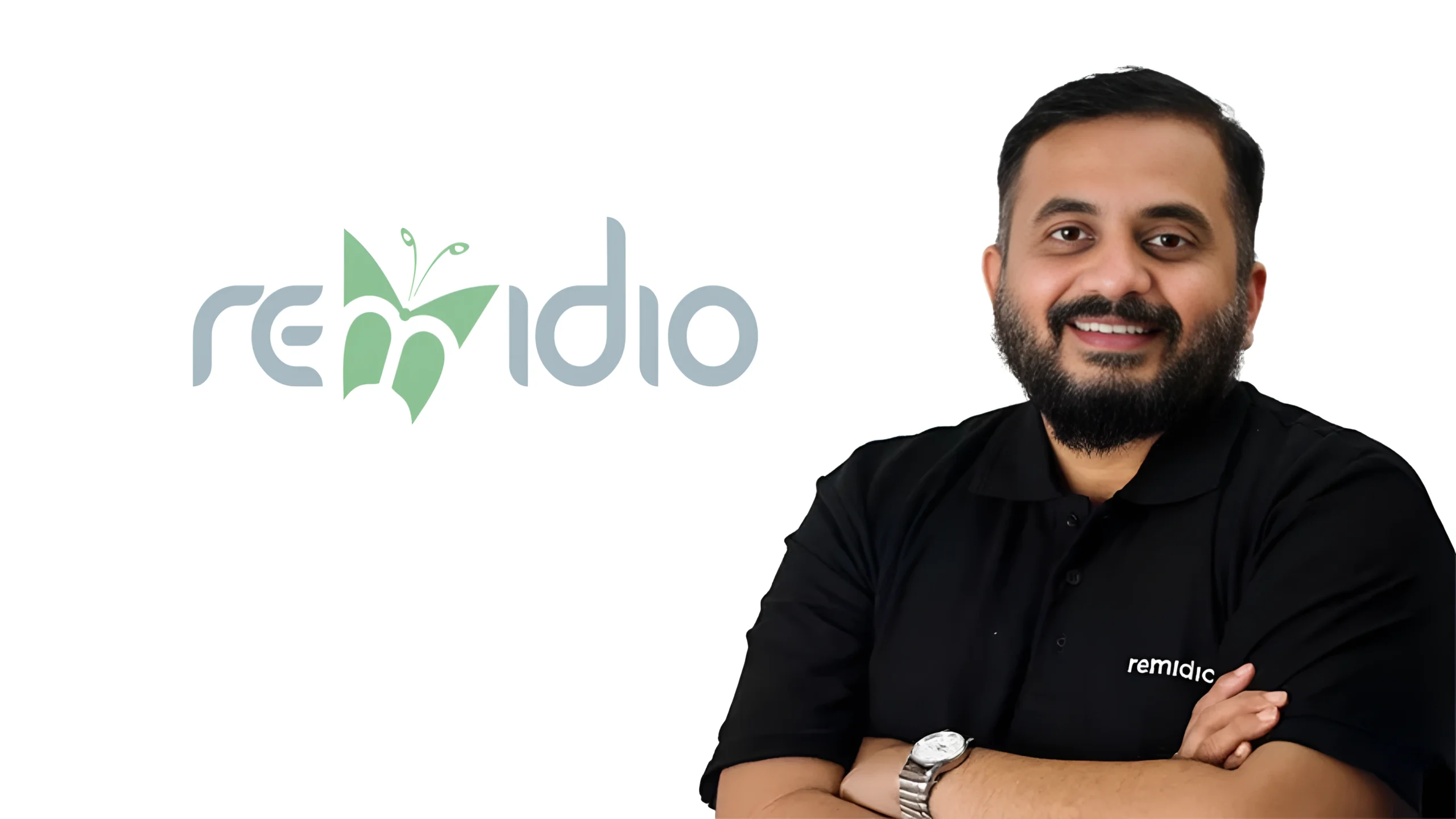
Bengaluru-based healthtech startup Remidio is working to solve this problem by transforming traditional ophthalmic diagnostic equipment into portable devices powered by artificial intelligence. The company’s technology allows healthcare workers to conduct eye screenings using smartphones, bringing preventive eye care closer to communities.
Founded by Anand Sivaraman, Remidio develops hardware and AI tools that enable early detection of eye diseases and even potential systemic health risks through retinal analysis.
Today, the company has deployed more than 4,000 diagnostic devices globally, conducted nearly 16 million screenings across 55+ countries, and employs over 200 people across India, Singapore, and the United States.
From Personal Tragedy to Healthcare Innovation
The inspiration behind Remidio came from a deeply personal experience.
Founder Anand Sivaraman is an engineering graduate from IIT Kharagpur who later pursued advanced studies at MIT, including a master’s degree, PhD, and postdoctoral research focused on technology and public health.
However, the death of his mother due to a cardiac event changed the direction of his career.
The incident motivated him to return to India and explore how technology could improve public healthcare systems.
Before launching Remidio, Sivaraman worked on diagnostic technologies for HIV/AIDS testing and helped build a healthcare startup that was later acquired by the American biomedical company Beckman Coulter.
The idea for Remidio emerged during a conversation with an ophthalmologist that highlighted a major inefficiency in eye care.
According to Sivaraman, ophthalmologists spend nearly 70% of their time identifying patients who require treatment, even though their real value lies in providing the treatment itself. This insight led him to explore whether the diagnostic stage could happen outside traditional clinics.
Miniaturising Eye Diagnostics
Remidio’s core innovation lies in miniaturising ophthalmic diagnostic equipment.
The company has developed smartphone-based diagnostic devices equipped with custom optical systems that capture detailed retinal images.
These images are analysed using artificial intelligence algorithms to detect conditions such as:
- Diabetic retinopathy
- Glaucoma
- Macular degeneration
Instead of relying solely on specialists, these devices allow trained healthcare workers to perform screenings in community settings.
The portable devices can fit into a small bag and are currently used in about 250 public health centres in Kerala, helping bring eye screening services closer to patients.
Remidio states that its devices are also around 15% cheaper than conventional ophthalmic equipment in India, making them suitable for large-scale screening programmes.
Product Portfolio: Insta and Pristine
Remidio’s products are divided into two major hardware categories.
Insta Series
The Insta range focuses on portable diagnostic tools designed for use outside traditional clinics. These devices are commonly used in primary health centres and community screening programmes.
The range includes:
- Handheld fundus cameras
- Portable slit lamps
- Autorefractors
- Compact ophthalmic diagnostic devices
Pristine Series
The Pristine range is designed for hospitals and specialist clinics.
These systems include advanced diagnostic technologies such as:
- Widefield fundus cameras
- Multimodal eye assessment platforms
- Optical biometers
- Neonatal retinal imaging systems
Both product lines are supported by MediosHI, Remidio’s AI platform for diagnosing eye diseases.
The company also provides Remidio Connect, a digital platform that supports teleconsultation and patient data management.
AI That Works Without Internet Connectivity
One of Remidio’s major innovations is its edge AI technology.
Instead of relying on cloud-based computing, the company developed AI models that run directly on the device.
This allows retinal images to be analysed without internet connectivity, which is especially useful in rural and low-resource areas.
The company began developing these edge AI models around 2018–2019.
Remidio’s AI systems have been clinically validated and supported by more than 90 peer-reviewed research publications.
The company has also secured regulatory approvals in multiple regions, including:
- EU MDR certification in Europe
- Approvals from India’s CDSCO
Using Eye Scans to Detect Other Diseases
Although Remidio started as an ophthalmology-focused company, its technology is now expanding into broader preventive healthcare.
The retina provides a unique view of the body’s microvascular system, which can reveal signs of other health conditions.
Remidio is developing AI models that analyse retinal biomarkers to detect risks related to:
- Cardiovascular disease
- Chronic kidney disease
- Maternal health conditions such as preeclampsia
This approach could transform eye screening into a gateway for early detection of multiple diseases.
Global Reach and Market Presence
Remidio now operates across multiple international markets including:
- India
- Southeast Asia
- United States
- Europe
The company serves hospitals, public health programmes, and insurance-based healthcare systems.
It expects to generate ₹80–85 crore in revenue this year, with approximately 60% coming from India and 40% from international markets.
Remidio’s technology is used by several leading healthcare institutions, including:
- Aravind Eye Care System
- Narayana Nethralaya
- L V Prasad Eye Institute
- Dr. Mohan’s Diabetes Specialities Centre
In the United States, the company also works with healthcare providers that offer home-based preventive screenings through insurance-backed models.
The Importance of Early Diagnosis
Large-scale screenings conducted through Remidio’s devices have revealed a major healthcare gap.
According to the company, around 99% of the disease cases identified through its screenings were previously undiagnosed.
This highlights the urgent need to expand preventive diagnostics, especially in countries with limited access to specialists.
India currently has only about 15,000 ophthalmologists serving more than a billion people, making community-based screening solutions increasingly important.
Building Deep-Tech Innovation in India
Developing advanced medical hardware in India was not easy when Remidio started around 2009–2010.
At that time, the ecosystem for building optical systems and medical electronics locally was still limited.
The company had to build expertise internally while navigating complex regulatory processes.
However, Sivaraman believes that working within constraints helped shape Remidio’s innovation strategy.
According to him, solving problems within limited resources often leads to solutions that can scale globally.
Future Plans
Remidio plans to expand its public health screening model beyond Kerala into other Indian states. At the same time, the company is strengthening its presence in international markets such as Europe and the United States.
With advancements in AI and retinal analysis, Remidio sees eye screening evolving into a broader tool for preventive healthcare.
The company’s long-term vision is simple: detect diseases early, prevent blindness, and improve overall health outcomes.