





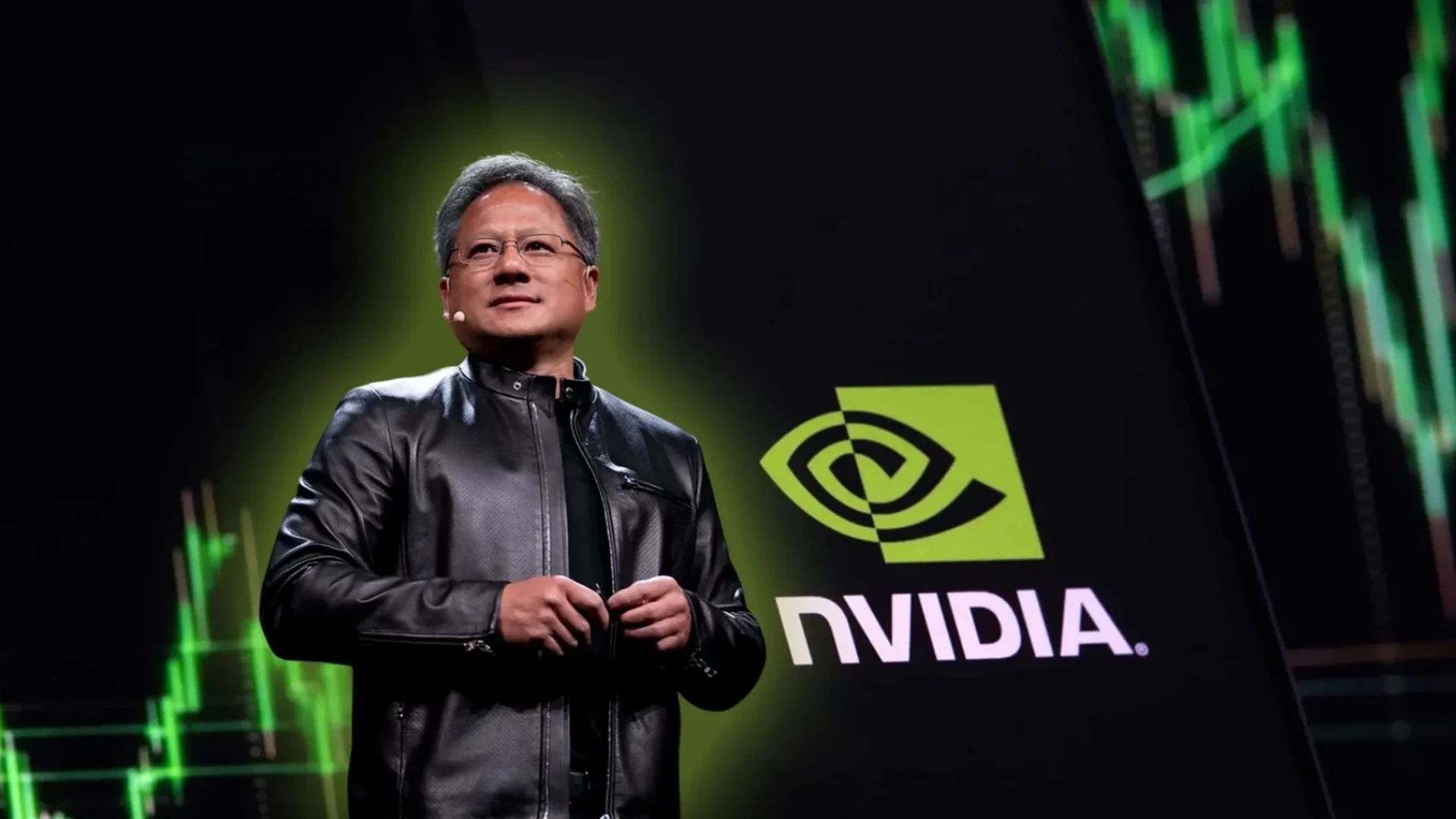
Nvidia’s stock declined on Thursday even after the company reported strong financial results, as investors raised concerns over the long-term returns from its aggressive investments in artificial intelligence infrastructure.
Shares of the chip giant fell nearly 4% to around $187, pulling down other semiconductor stocks such as Broadcom and Advanced Micro Devices (AMD). The decline came just a day after Nvidia’s stock had closed at a three-month high.
Strong Results Fail to Lift Sentiment
Despite posting robust earnings, Nvidia’s stock reaction highlighted growing investor caution. While the company continues to benefit from surging demand for AI chips and data center solutions, some shareholders appear concerned about capital allocation priorities.
Instead of significantly increasing shareholder returns through buybacks or dividends, Nvidia has been reinvesting heavily into expanding the broader AI ecosystem.
This strategy, though growth-focused, has created uncertainty about how quickly these investments will translate into measurable returns.
Investor Focus Shifts to Capital Allocation
Nvidia has positioned itself at the center of the global AI boom, supplying advanced GPUs and infrastructure for artificial intelligence applications.
However, investors are now evaluating:
- Sustainability of AI-driven revenue growth
- Margins amid heavy infrastructure investments
- Timing of returns from ecosystem expansion
- Long-term shareholder value creation
The market reaction suggests that strong earnings alone may not be enough if future capital spending raises concerns about profitability visibility.
Ripple Effect Across Semiconductor Stocks
The weakness in Nvidia shares also impacted the broader semiconductor sector. Stocks of major chipmakers including Broadcom and AMD traded lower following Nvidia’s decline.
Given Nvidia’s significant weight in major US indices and its leadership position in AI hardware, movements in its stock often influence broader tech market sentiment.
AI Expansion Remains Central to Nvidia’s Strategy
Nvidia continues to invest heavily in AI-driven technologies, including:
- Data center infrastructure
- AI chips and GPUs
- Software ecosystems
- Strategic partnerships
The company aims to strengthen its dominance in the AI hardware market, which remains one of the fastest-growing technology segments globally.
However, large-scale investment cycles can sometimes create short-term volatility in stock performance.
Market Balancing Growth vs. Returns
The recent stock movement highlights a broader market theme — balancing aggressive growth strategies with shareholder return expectations.
Investors are increasingly evaluating whether AI companies can maintain rapid growth while also delivering consistent returns.
While Nvidia remains a central player in the AI revolution, the market appears to be shifting from enthusiasm-driven rallies to performance-driven scrutiny.
Outlook
Despite the short-term decline, Nvidia continues to hold a strong position in the global AI and semiconductor industry. Demand for AI computing infrastructure remains robust, and long-term growth prospects are intact.
However, investor focus may remain on capital discipline, profit margins, and clarity on returns from AI ecosystem expansion.
Conclusion
Nvidia’s share decline, despite strong earnings, reflects evolving investor expectations in the AI era. Markets are now weighing not just revenue growth but also capital efficiency and shareholder returns.
As AI investments accelerate globally, companies like Nvidia will need to balance expansion strategies with investor confidence.