





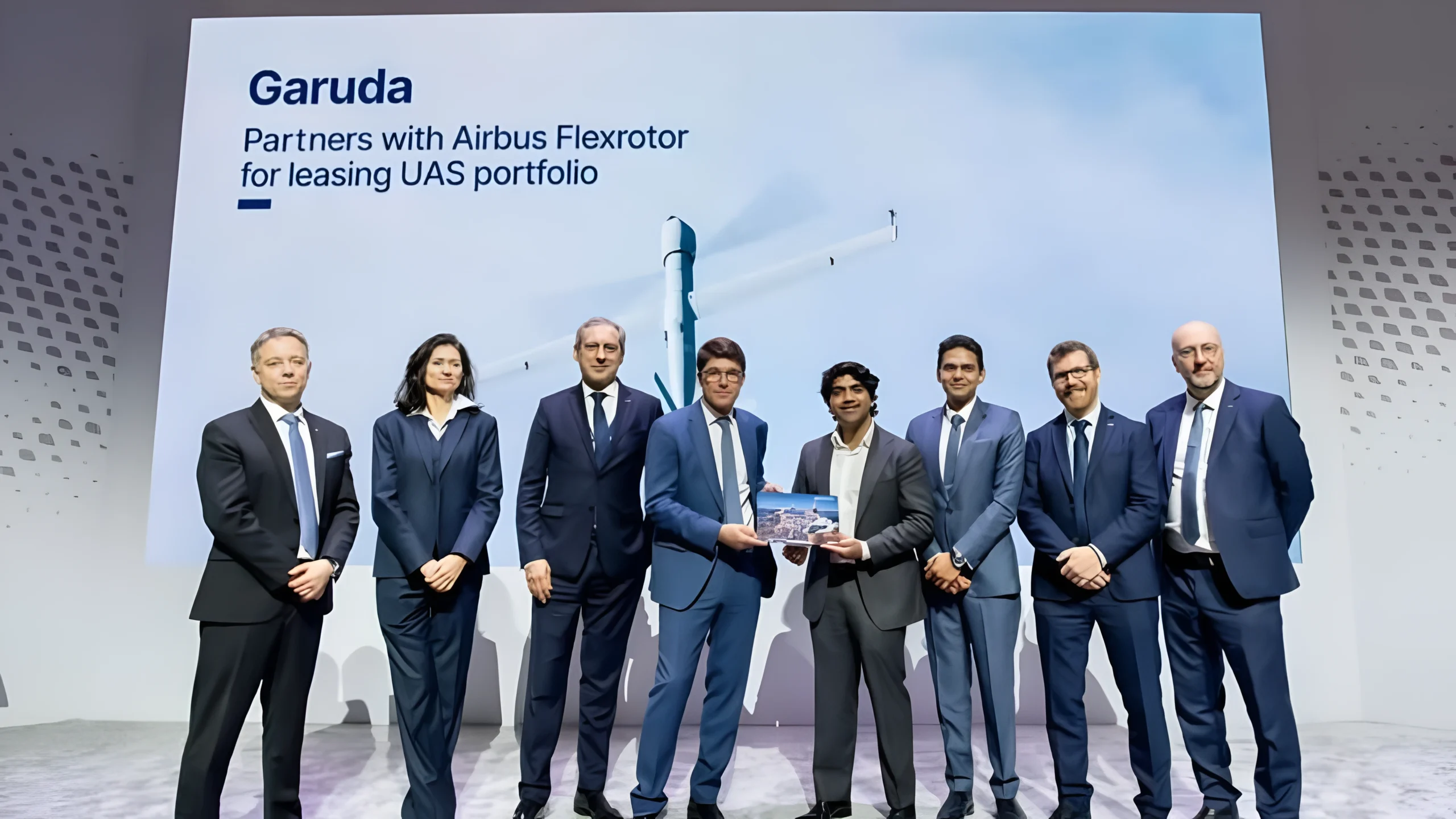
Indian drone technology company Garuda Aerospace has partnered with Airbus Helicopters to deploy advanced unmanned aerial systems (UAS) for global monitoring and intelligence missions.
As part of the agreement, Garuda Aerospace will acquire up to 18 Flexrotor drones from Airbus Helicopters. The collaboration aims to strengthen Garuda’s international drone services and expand its global drone leasing portfolio.
Strategic Partnership to Expand Global Drone Operations
The partnership marks an important step in Garuda Aerospace’s international growth strategy. By adding Airbus’ Flexrotor drones to its fleet, the company plans to offer long-endurance aerial monitoring solutions to clients worldwide.
Garuda Aerospace already manufactures drones and provides aerial services across multiple industries. The company now aims to move beyond manufacturing and focus on high-end aerial intelligence and monitoring services.
This partnership reflects a growing trend in the drone industry where companies are shifting from hardware manufacturing to advanced service-based drone operations.
Garuda Aerospace’s Growing Drone Ecosystem
Garuda Aerospace has emerged as one of India’s leading drone technology companies.
According to the company:
- It has manufactured more than 5,000 drones
- It holds around 30% market share in India’s agricultural drone sector
- It has served over 500 enterprise and government clients globally
With the addition of the Flexrotor drone system, Garuda Aerospace plans to expand its services through a global drone leasing model.
The company will offer two types of leasing services:
Dry Lease
Customers rent only the drone equipment.
Wet Lease
Garuda provides the drone along with trained crew, maintenance, and operational support.
This model will help organizations access advanced drone capabilities without investing in expensive infrastructure.
Flexrotor Drone: Built for Long-Endurance Missions
The Flexrotor UAS, developed by Airbus Helicopters, is designed for long-duration intelligence and monitoring missions.
Key features of the Flexrotor drone include:
- Weight: Approximately 25 kg
- Flight endurance: 12–14 hours
- Mission type: ISTAR (Intelligence, Surveillance, Target Acquisition, and Reconnaissance)
The drone can carry multiple advanced sensors to gather data across large geographic areas.
Its lightweight design allows it to operate in remote locations with minimal infrastructure.
Fast Deployment and Autonomous Operation
One of the key advantages of the Flexrotor drone is its expeditionary agility.
The drone requires only a 3.7m × 3.7m launch area and can operate from both land and ships.
Other capabilities include:
- Autonomous take-off and landing
- Quick deployment in remote environments
- Ability to transition from storage to flight in less than 30 minutes
These features make the drone suitable for a wide range of applications.
Expanding Drone Applications Across Industries
Garuda Aerospace plans to deploy the Flexrotor drones across multiple sectors.
Potential applications include:
- Oil and gas pipeline monitoring
- Railway infrastructure inspection
- Disaster response operations
- Wildfire monitoring
- Environmental surveillance
These use cases require long-duration flights and advanced sensor capabilities, making Flexrotor an ideal solution.
North America Expansion Strategy
The partnership also supports Garuda Aerospace’s expansion into North American markets.
The company will manage its operations through its Delaware-based subsidiary, Garuda Technologies Inc.
By offering advanced drone leasing services in international markets, Garuda aims to become a global provider of aerial intelligence solutions.
Conclusion
The partnership between Garuda Aerospace and Airbus Helicopters highlights the rapid evolution of the global drone industry.
By integrating Flexrotor drones into its fleet, Garuda Aerospace is expanding from a drone manufacturer into a global drone services and intelligence platform.
As industries increasingly adopt drone-based monitoring and surveillance solutions, collaborations like this could accelerate the adoption of advanced unmanned aerial systems worldwide.