





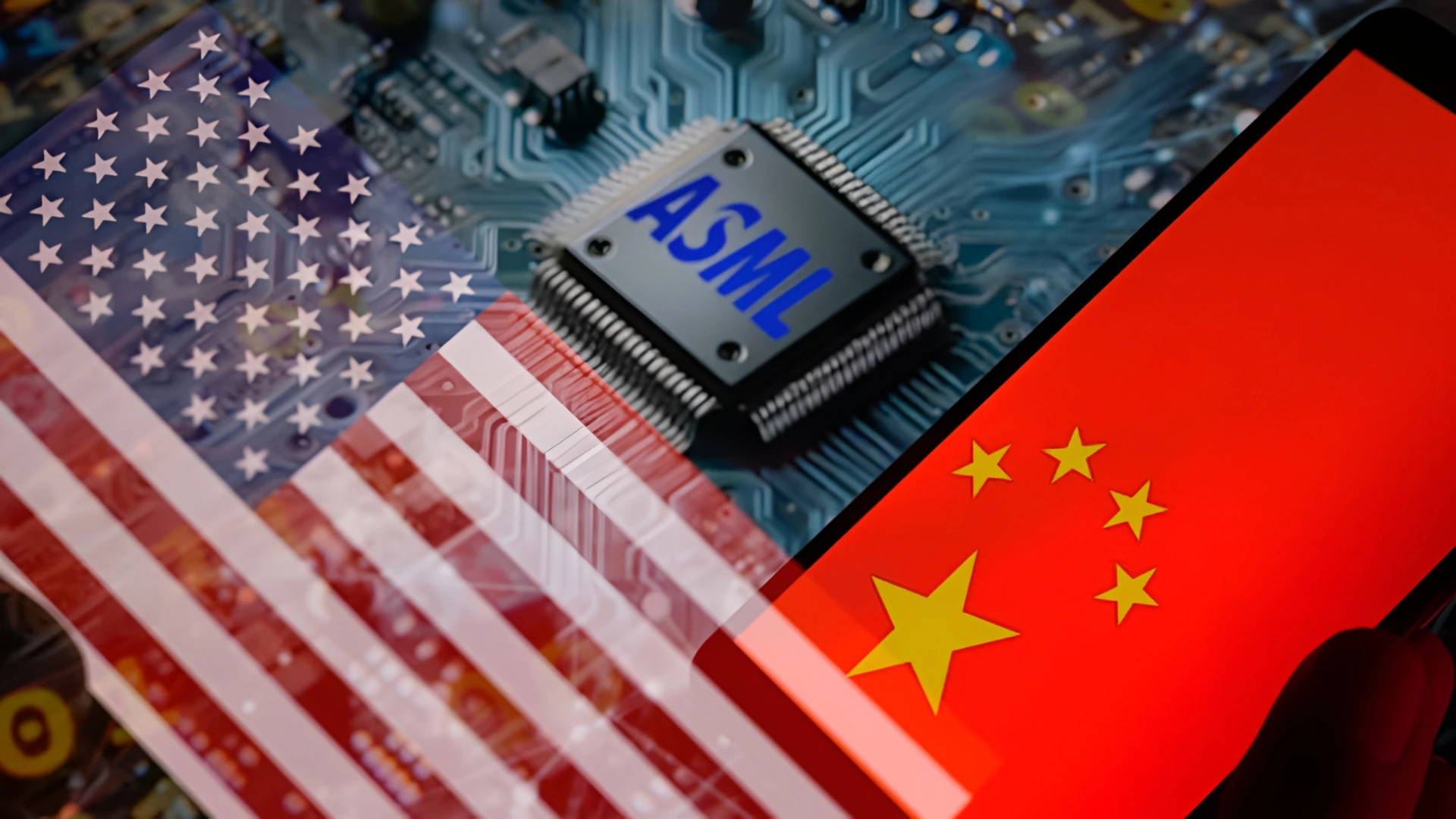
ASML Shares Fall Amid New U.S. Export Restrictions
ASML shares fall after new U.S. proposals aim to tighten semiconductor export restrictions on China, creating fresh uncertainty for the global chip industry.
Dutch semiconductor giant ASML saw its stock decline following reports that U.S. lawmakers are planning stricter controls that could directly impact its business in China.
This development highlights how geopolitical tensions continue to shape the future of the semiconductor industry.
What Is the New U.S. Proposal?
A group of bipartisan U.S. lawmakers has introduced the MATCH Act (Multilateral Alignment of Technology Controls on Hardware).
The goal is simple but impactful:
👉 Restrict China’s access to advanced chipmaking technologies
👉 Align export policies among U.S. allies
👉 Close loopholes in existing semiconductor restrictions
According to lawmakers, current gaps in global coordination have allowed China to continue accessing critical technologies.
Why ASML Is at the Center of This Issue
ASML plays a crucial role in the global semiconductor ecosystem.
The company manufactures:
🔬 EUV Machines (Extreme Ultraviolet)
- Used for advanced chips
- Already restricted from export to China
🔬 DUV Machines (Deep Ultraviolet)
- Used for less advanced chips (memory, consumer electronics)
- Still accessible to Chinese companies—until now
The new proposal specifically targets DUV machines, which could significantly impact ASML’s China business.
Potential Business Impact on ASML
China remains a key market for ASML.
- China contributed ~33% of ASML sales in 2025
- Expected to drop to ~20% in 2026
- New restrictions could push this even lower
If DUV exports are fully restricted:
👉 ASML could face a noticeable revenue hit
👉 Short-term demand may spike before restrictions
👉 Long-term sales could decline
Analysts estimate the impact could affect around 5% of total revenue.
Ripple Effects on the Global Chip Industry
The implications go beyond ASML.
China’s semiconductor industry heavily relies on ASML’s tools, especially for:
- Memory chips
- Consumer electronics components
Major Chinese firms like:
- Semiconductor Manufacturing International Corp (SMIC)
- Hua Hong
still depend on DUV machines for production.
If restrictions are enforced, it could:
- Slow down China’s chip manufacturing
- Increase global supply chain disruptions
- Accelerate China’s push for domestic alternatives
A Double-Edged Sword for China
Interestingly, past U.S. restrictions have had mixed effects.
While they limited access to advanced tech, they also:
- Encouraged local innovation
- Boosted domestic semiconductor companies
- Reduced long-term dependency on foreign suppliers
However, ASML’s technology—especially EUV—still has no true alternative globally.
What Happens Next?
The proposal is still in its early stages and must go through:
- U.S. legislative approval
- International coordination
So the outcome remains uncertain.
But one thing is clear:
👉 Geopolitics is now a major driver of the semiconductor industry.
Final Thoughts
The news that ASML shares fall due to U.S. export curbs is more than just a market reaction—it reflects a deeper shift in global technology dynamics.
As nations compete for control over semiconductor supply chains, companies like ASML are caught at the center of a high-stakes geopolitical game.
For investors, startups, and tech companies alike, this is a reminder that the future of innovation is increasingly tied to policy, politics, and global alliances.