



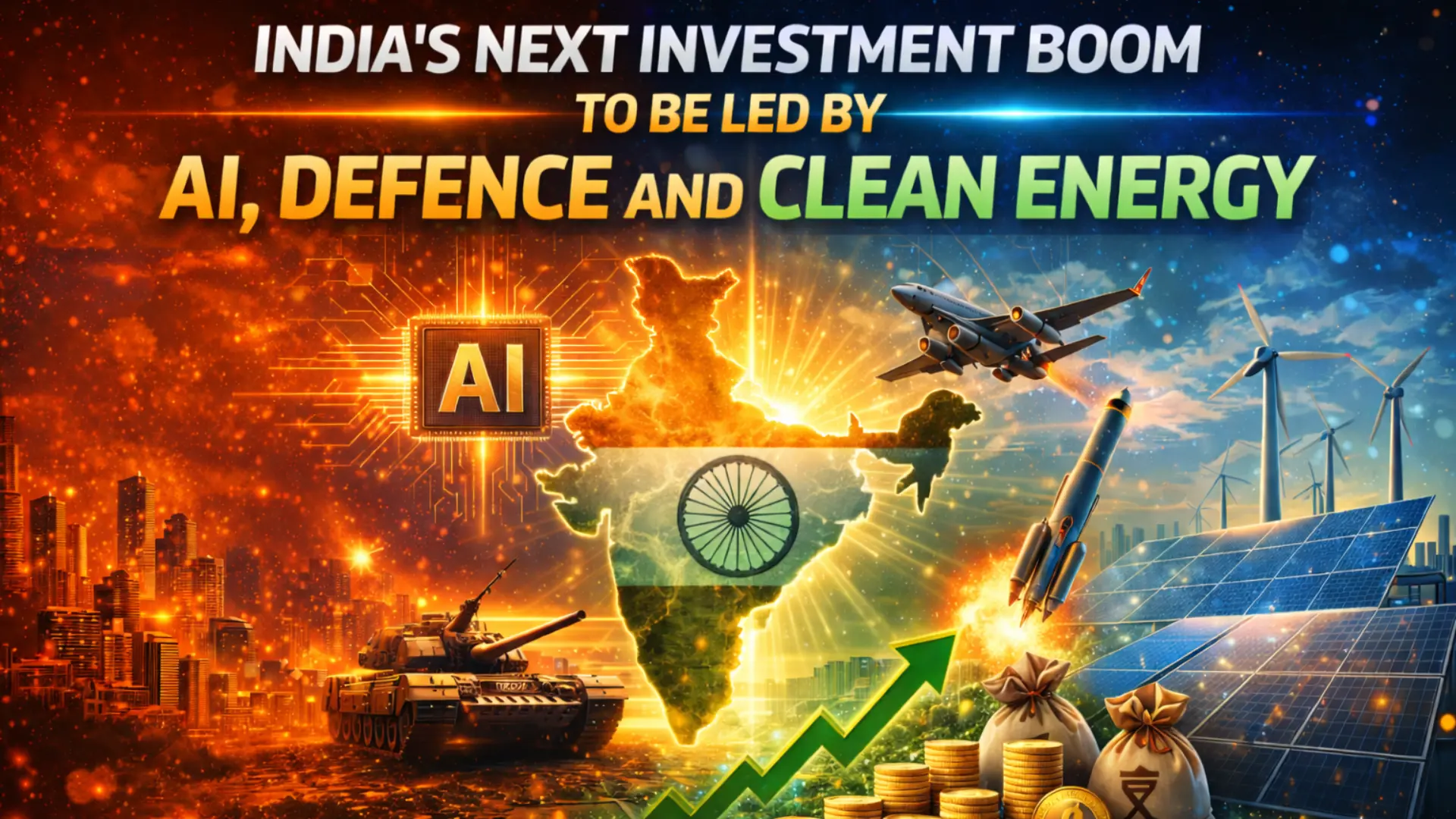
India is entering a new phase of economic expansion, with major investments expected in Artificial Intelligence (AI), defence, and energy transition. These sectors are set to drive the country’s next capital expenditure (capex) wave, creating significant opportunities for startups, investors, and businesses.
With strong government support, rising private investments, and increasing global demand, India is positioning itself as a key global hub for technology, defence manufacturing, and clean energy.
What is Capex and Why It Matters
Capital expenditure, or capex, refers to investments made by governments and companies in infrastructure, technology, equipment, and facilities to support long-term growth.
Capex is important because it:
Drives economic growth
Creates jobs
Boosts industrial development
Encourages innovation
Strengthens national infrastructure
India’s next capex cycle is expected to focus heavily on AI, defence, and energy transformation.
AI to Become a Major Investment Driver
Artificial Intelligence is becoming a critical technology across industries such as healthcare, finance, manufacturing, and digital services.
India is investing in AI through:
AI research and development
AI startups and innovation hubs
Data centres and cloud infrastructure
AI-powered automation solutions
The government’s IndiaAI Mission and increasing private investments are helping accelerate AI adoption across sectors.
AI is expected to improve productivity, efficiency, and global competitiveness.
Defence Sector Seeing Massive Growth
India is rapidly expanding its defence capabilities and reducing dependence on imports through domestic manufacturing.
Key investment areas include:
Defence equipment manufacturing
Aerospace and missile systems
Defence electronics
AI-powered defence technologies
Drone and autonomous systems
Government initiatives such as “Make in India” and defence production incentives are encouraging startups and private companies to participate in defence innovation.
India aims to become a major global defence manufacturing hub.
Energy Transition Creating New Opportunities
India is also investing heavily in clean energy and sustainability as part of its energy transition goals.
Key focus areas include:
Renewable energy (solar and wind)
Green hydrogen
Electric vehicle infrastructure
Battery storage technology
Smart energy systems
These investments are essential to reduce carbon emissions and ensure long-term energy security.
Energy transition is also creating new opportunities for startups in clean technology and sustainability.
Strong Government and Private Sector Support
Both government and private companies are increasing investments in these strategic sectors.
Major drivers include:
Government infrastructure spending
Corporate investments
Foreign direct investment (FDI)
Startup ecosystem growth
Technology innovation
This combined effort is accelerating India’s economic and technological development.
Opportunities for Startups and Entrepreneurs
India’s capex wave will create major opportunities for startups in areas such as:
AI SaaS platforms
Defence technology startups
Clean energy startups
Semiconductor and hardware startups
Data centre infrastructure
Startups that focus on these sectors can benefit from strong demand, funding opportunities, and government support.
Impact on India’s Future Economy
Investments in AI, defence, and energy will strengthen India’s position as a global technology and industrial leader.
Expected benefits include:
Job creation
Increased innovation
Stronger national security
Sustainable energy development
Economic growth
India is expected to become one of the world’s leading economies in the coming years.
Conclusion
AI, defence, and energy transition are set to drive India’s next capex wave, shaping the country’s economic future. With strong investments and policy support, these sectors will create massive opportunities for startups, businesses, and investors.
As India continues to invest in advanced technologies and infrastructure, it is well positioned to emerge as a global leader in innovation, defence manufacturing, and clean energy.